
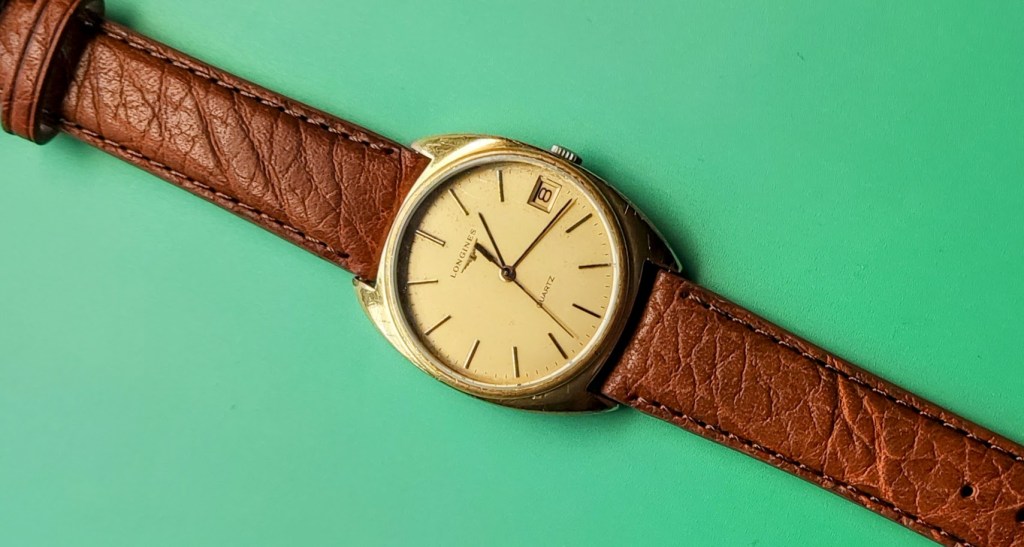
The watch was presented as not running and no ability to change the date (either by quick set or by winding on beyond the midnight hour). The strap was also broken and the case needed a clean.
I noted that the hour and minute hands were moving and setting as they should so the issue was likely with the date setting specifically. The quick set date function would not move despite moving the crown.
Time to open up this longines and take a look. This model has a front bezel as well as a case back, the movement retension case plates and screws were held on top of the case so as to stop the movement falling through the front so the dial and movement are removed from the front.
I took the bezel off and removed the delicate hands first whilst still cased (the case is designed to hold the movement so makes a great movement holder!). One he hands were safely out of the way the caseback comes off the back of the watch and reveals those case plates and screws and, once removed, the movement and dial fell from the case onto the cushion.

The non-running issue was immediately apparent as there was no battery – at least that was my hope. This 940.111 movement takes a Renata 390 battery (SR1130S) which should be fitted “upside down” (with the writing on the battery downwards). I put the battery in and re-attached the seconds hand to see if there was any movement. Happily, the seconds hand moved so the non-running issue was solved rather easily! Now onto the date set issue…
The dial feet are unfastened to the movement by way of two levers/clips on either side of the movement. With the dial feet loosened from the clips the dial came away from the movement easily. Once the dial was removed and access to the keyless works and date setting mechanism was revealed there were two issues that came to light. First the date ring had come free from its retaining plate – the date ring teeth should sit below the edge of the plate. This had caused the date ring to move vertically so neither the quickset date wheel or the date wheel could get a grip of the dial teeth to move them (and thus set the date). On closer inspection, some of the quickset date wheel’s teeth were missing. It looked ike at some point considerable (way too much) force had been applied when trying to quickset the date – causing the teeth to break and the date ring to ride up out of position.
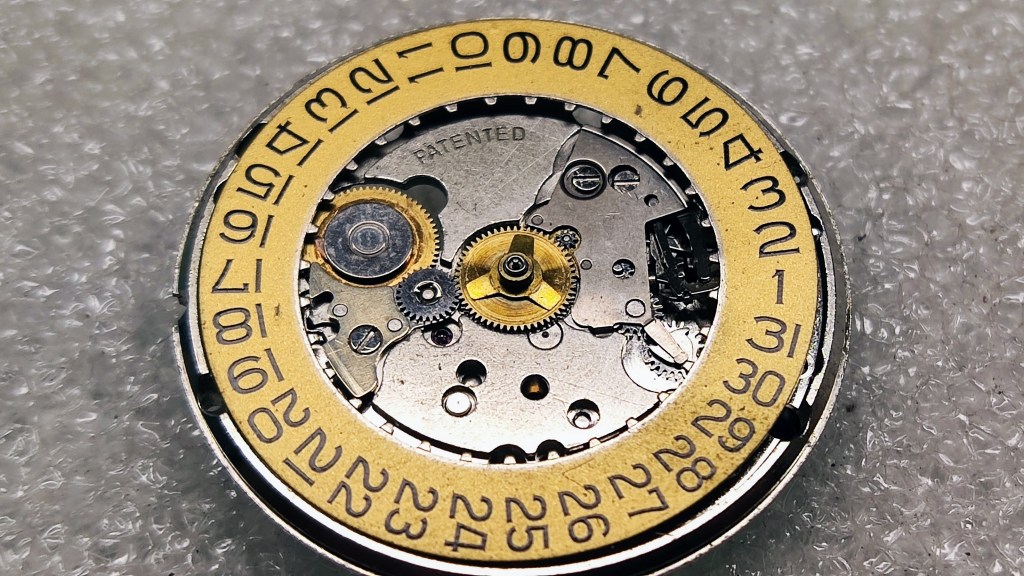
The quickset date wheel would need to be replaced but short of buying an entire movement the part (2566) was not available. I know that some ETA/ESA parts are interchangeable between movements so I gambled on buying the 2566 part from a ETA 2892. While this is of a different design it does work in the 940.111 movement.
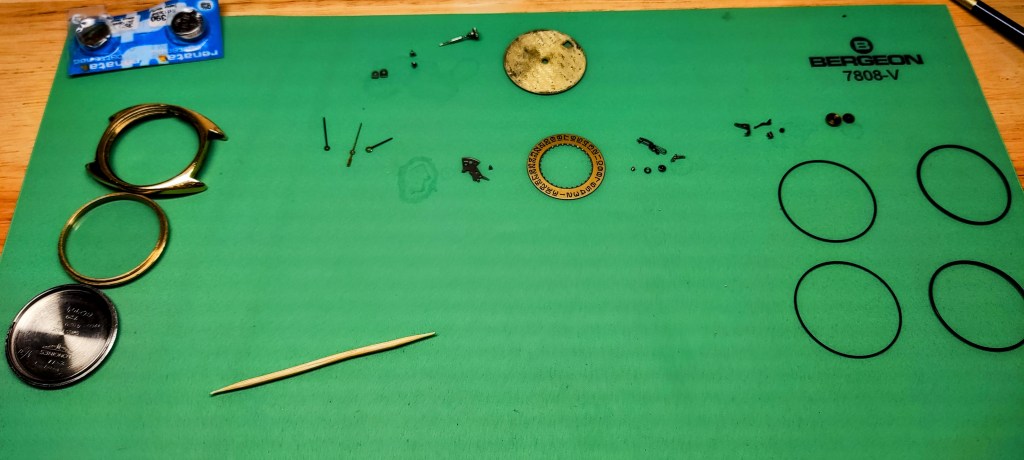
While I waited for the part to arrive I stripped down the keyless works and the gear train (all the mechanical parts) and cleaned these (along with the mainplate) in the ultrasonic cleaner. I also cleaned the case, caseback and bezel in the ultrasonic.
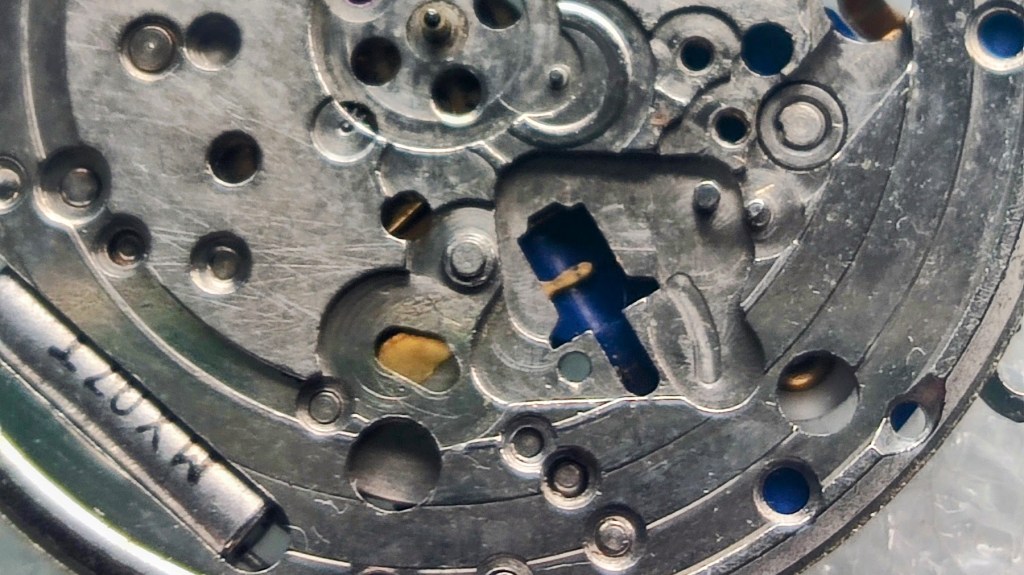
Once the part arrived and everything was clean I was ready to reassemble. The assembly is relatively staightforward and my only issue was the hacking mechanism not engaging – paticulatly annoying as I only foound this out once the movement was fully assembled, the dial in situe and the hands replaced. I tehn had to remove everything down to and including the keyless works in order to engage the thin metal “yolk” underneath the clutch wheel (part 407).
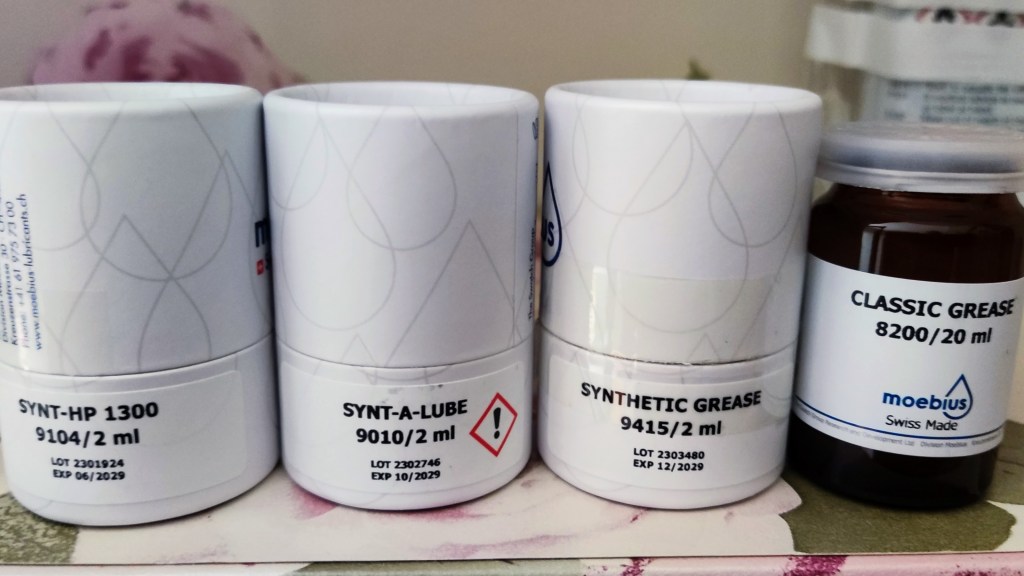
Lubrication was done as I reassembled using Moebius 9010 for the gear train pivots/jewels and Moebius 9104 (HP1300) for the high friction areas (the cannon pinion and areas of the keyless works). I used grease (Moebius 8200) for the stem only.
Once I checked the hacking mechanism (this time looking at the gear train to make sure it stopped when the crown was pulled out furthest to the hand setting function) The movement was then re-united with the dial and re-cased. Hands refitted to 12am (having ensured that the date had just ticked over as it would at midnight) then set to the correct time. The front bezel was then attached (snap on attachment) and a new watch strap added.
It was a nice early example of a quartz movement and had a suprising amount of mechanical parts for a watchmaker to get stuck into. The only non-mechanical parts were the quartz and CMOS (microchip) acting as the balance and the magnetic coil and rotor acting as the escapement. I think these earlier quartz examples are often dismissed and under-valued as “only quartz” but I’d happily work on similar in the future.
 Fitzgerald Watch Company Ltd - Watch Repair
Leave a comment